Pet relocation doesn’t end at the airport. Neither do we.
End-to-end, door-to-door pet relocation for South African refugees moving to the USA.
Why refugee pet relocation needs different planning
Refugee relocations are not standard international moves. Families often arrive in the United States without vehicles, local contacts, or familiarity with airline cargo systems. Timelines can shift quickly, and there is very little margin for error. Traditional pet relocation services typically focus on international flights and arrival clearance. For refugees, the most complex and stressful part of the journey often begins after landing. That’s why we plan the full journey — including domestic travel —before your pet ever flies.
The reality of a responsible journey
Responsible pet relocation goes beyond booking flights and preparing paperwork.
It means planning for real-world constraints such as airline embargoes, limited domestic flight availability, weather restrictions, and the realities refugees face on arrival.
We take responsibility for the full journey, from South Africa to your front door in the United States, with careful planning at every stage to reduce stress, delays, and unnecessary handling.
.png)

Where we take responsibility
- Entry airports chosen based on your final destination — not convenience
- Domestic travel planned before international flights are booked
- Airline embargoes checked across all legs of the journey
- Reduced crate transfers wherever possible
- Clear expectations before your pet ever flies
The reality many refugee families face after arrival in the United States.

Not having a car is not a small detail, it changes everything
For many South African refugees arriving in the United States, owning or renting a car is not immediately possible.
This is normal.
It’s not poor planning.
It’s the reality of starting over.
Without reliable transport, families may be unable to:
-
travel long distances to collect pets from ports of entry
-
move between airports for onward domestic flights
-
respond quickly to last-minute schedule changes
-
manage unexpected delays or re-routing
Yet many traditional pet relocation models assume vehicle access exists.
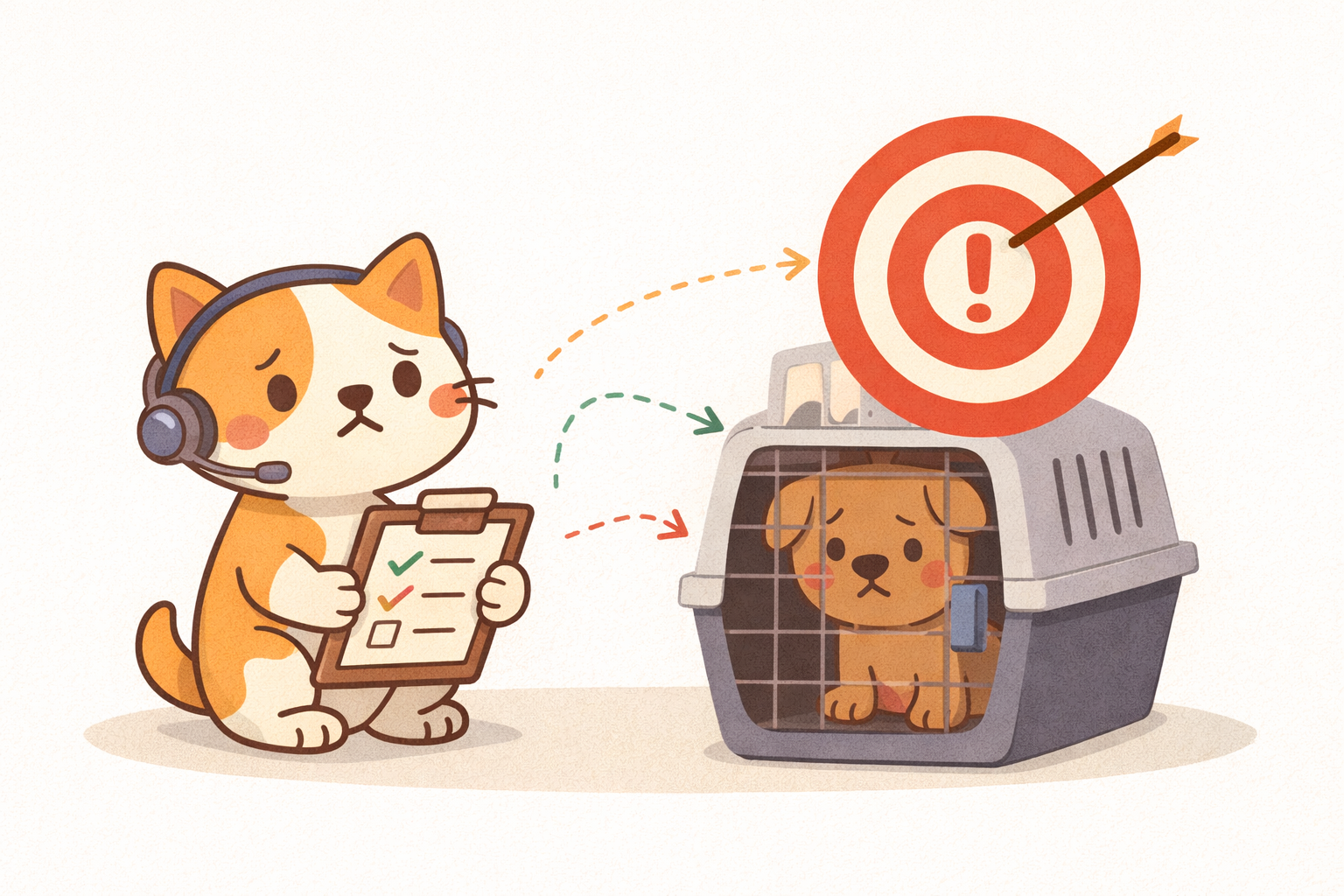
Why this becomes a serious problem for pets
When post-arrival transport is not planned in advance:
-
pets may be released hours or days before owners can reach them
-
pets may need to be kennelled temporarily in unfamiliar environments
-
long-distance ground transport becomes the only remaining option
-
pets spend more time crated than necessary
For refugees, this is not an inconvenience, it is a welfare risk.

The financial reality refugees are rarely warned about
Relocating pets to the United States involves multiple cost stages, not a single payment.
For refugee families, unplanned costs after arrival can be especially difficult to manage, including:
-
domestic flights that must be booked at short notice
-
long-distance ground transport if flights are unavailable
-
temporary kennelling if pets are released before owners can reach them
-
additional handling or re-booking fees caused by embargoes or delays
When these costs are discovered after arrival, families often have limited financial flexibility and very few alternatives.
This is why transparency and advance planning matter.
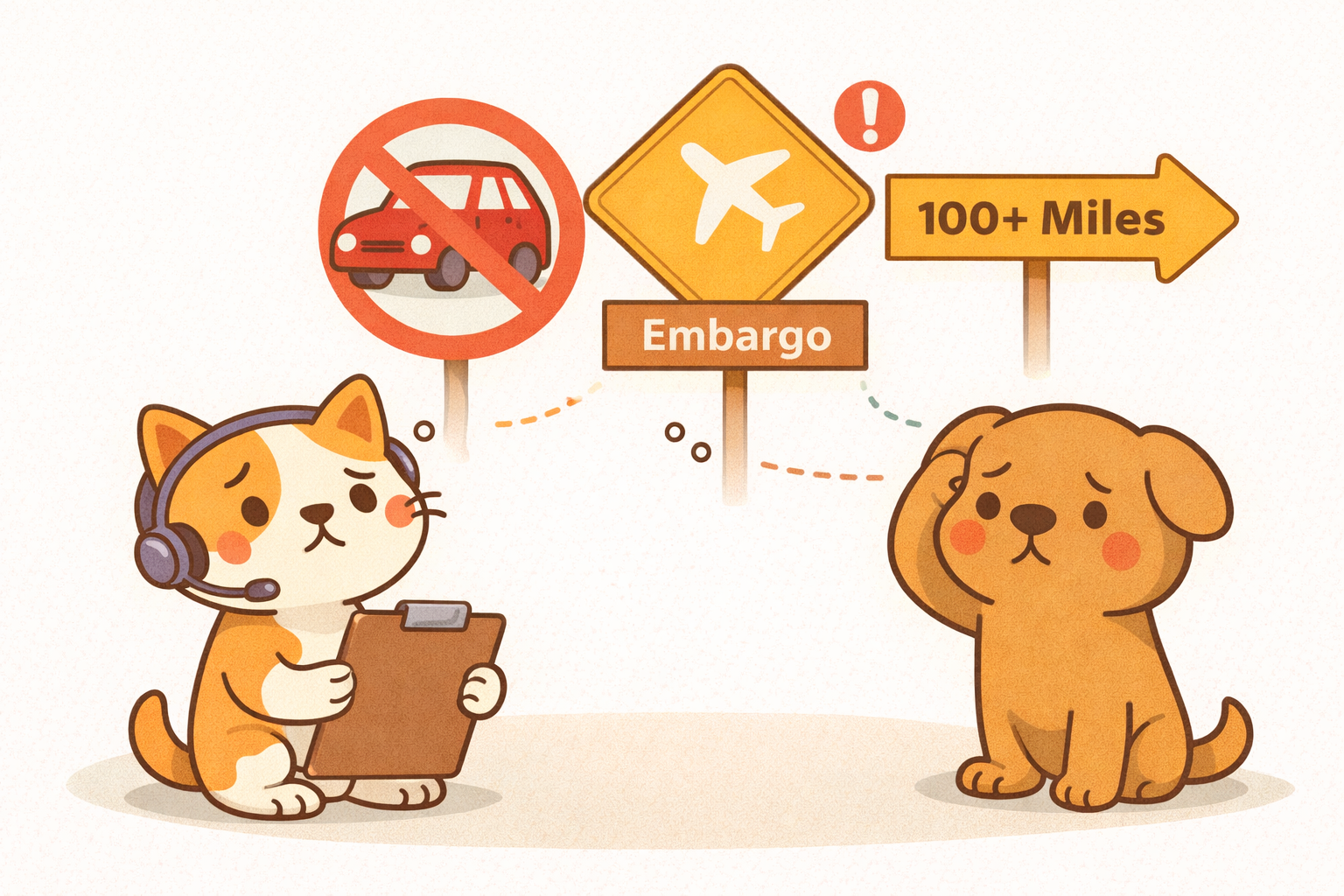
How this gap typically shows up
Many families are told:
-
“You can arrange domestic travel after arrival.”
-
“Just book a connecting flight.”
-
“You can drive to collect your pet.”
These options often aren’t realistic when:
-
domestic flights are embargoed
-
owners do not yet have a car
-
families are placed hundreds of miles from the port of entry
-
U.S. airline cargo systems are unfamiliar
By the time this becomes clear, choices are limited — and costs increase.
How we plan differently
At Tails in Transit, we assume no car access unless confirmed otherwise.
That means:
-
entry airports are chosen with onward travel and cost impact in mind
-
domestic flights or ground transport are planned before international travel
-
realistic post-arrival costs are discussed upfront
-
timelines are coordinated so pets are not released without a clear onward plan
-
financial surprises are reduced wherever possible
This is not an add-on.
It is part of responsible, refugee-aware planning.
Contact Tails In Transit
Have questions about international pet transportation or ready to start your pet's journey from South Africa to the USA? Fill out the form below and our dedicated team will assist you every step of the way. We’re here to make pet relocation safe, stress-free, and personalized for your furry family members.
Frequently Asked Questions:
Have questions about international pet transportation or ready to start your pet's journey from South Africa to the USA?
Have a look at the below questions. 😺
✈️ 1. What does Tails in Transit actually handle?
We manage the full pet relocation journey, not just flights.
That includes planning international and domestic legs together, accounting for airline embargoes, entry airport restrictions, customs and veterinary checks, and safe onward travel to your final destination.
Our responsibility doesn’t stop when your pet lands in the U.S. — it continues until they reach your home.
🐾 2. How does the travel process work?
Every relocation is planned as a single journey, even when it involves multiple flights or ground transfers.
We plan:
-
departure from South Africa
-
layovers and port-of-entry logistics
-
U.S. customs and vet inspection
-
domestic travel to your final state
This planning happens before your pet ever flies, reducing delays, unnecessary handling, and last-minute surprises.
❤️ 3. Why choose Tails in Transit?
We specialize in relocations where there is little margin for error.
That includes refugee families who:
-
arrive without vehicles or local support
-
face domestic travel challenges after entry
-
need clarity and planning before committing
We don’t compete on price.
We compete on responsibility, foresight, and follow-through.
💰 4. How are costs calculated?
Costs are based on the entire journey, not just the international flight.
Factors include:
-
routing and entry airport selection
-
airline and embargo constraints
-
crate size and handling requirements
-
domestic travel after arrival
Because refugee relocations often involve limited flexibility and tight timelines, we price for planning, responsibility, and reduced risk, not just transport.
🐕 5. Can my pet travel with me on the same flight?
Most pets travel as manifest cargo, not in-cabin. We do our best to align your pet’s flight with your own for a smooth reunion when you land. However, if you cannot be joined on the same flight, they will travel in an temperature controlled, cargo hold.
🧳 6. What documents are needed for export?
Document requirements depend on your pet, routing, airline, and port of entry.
We guide you through:
-
veterinary requirements
-
export documentation
-
airline compliance
-
U.S. import and inspection paperwork
Rather than giving a generic list, we plan documentation around the full journey, including onward travel after arrival.
📏7. How do I measure my pets?
We have a complete guide on how to measure your loved ones, just click on the get quote and an-automated reply will be sent with the instructions, or you can scroll down a bit and find the downloadable PDF, or like this:
Step 1:
Gather a tape measure, scale, pen & paper.
Step 2:
In a standing upright position, here are the four points to measure in CM’s:
A: tip of the nose → base of tail (do not include tail)
B: from the ground → elbow joint
C: width at widest point (across shoulders or widest body point while standing)
D: height in a natural standing position from the floor to the top of the head or the ear tip (whichever is higher)
Step 3:
Place your pet on a scale, and measure the weight in KG’s.
If your pet is too large to fit on, maybe a trip to the vet is needed. 🤭
Additional questions for families relocating under refugee status
1. Who is this service designed for?
Our services are designed specifically for South African refugees relocating to the United States who need more than a standard pet shipment.
We work with families who:
-
arrive in the U.S. without vehicles or local support
-
face tight timelines and limited flexibility
-
need certainty around what happens after their pet lands
If your pet’s journey cannot afford gaps, assumptions, or last-minute decisions, this service is designed for you.
2. Why does refugee pet relocation require different planning?
Refugee relocations are not standard international moves.
Families often arrive before their pets, cannot easily travel to distant airports, and may be unfamiliar with U.S. cargo systems, airline embargoes, or domestic flight limitations.
The most complex part of the journey often begins after arrival in the U.S.
That’s why we plan the entire journey upfront, including domestic travel, before your pet ever flies.
3. What does Tails in Transit handle from start to finish?
We take responsibility for the full journey, not just the international flight.
This includes:
-
planning entry airports based on your final destination
-
checking airline embargoes across all legs
-
managing customs and veterinary inspections
-
arranging onward domestic travel or ground transport
-
reducing unnecessary crate handling wherever possible
We do not walk away once your pet lands.
5. Can you help if I don’t know my final U.S. address yet?
Yes — this is common in refugee relocations.
We plan routes and entry points based on likely destinations and realistic scenarios, then adapt once final details are confirmed.
What matters most is that onward travel is considered before international flights are booked, not after.
6. Can my pet fly to a different U.S. airport than where I land?
Yes, and in many refugee cases, this is necessary.
Pets are often routed through ports of entry that best support:
-
customs and veterinary clearance
-
crate handling
-
onward domestic transport
We choose entry airports based on what is safest and most practical for your pet, not convenience or habit.
7. Do you offer flight-only or partial services?
We don’t offer flight-only bookings, because post-arrival planning is where most welfare risks occur — especially for refugee families. Our services are designed around the full journey, including what happens after landing.
8. Can you take over a booking that has already been made?
In some cases, but not always.
If international flights are booked without considering entry requirements, embargoes, or onward travel, options may be limited.
We are always honest about what can — and cannot — be fixed safely.
9. What if I don’t have a car to collect my pet in the U.S.?
This is common for refugee families.
We plan relocations with the assumption that vehicle access may not be available.
That’s why we consider domestic travel and final delivery before your pet flies internationally, so pets are not released into situations their owners cannot realistically manage. We aim to have your pet delivered to your new front door in the U.S.
10. How is Tails in Transit different from traditional pet relocation agencies?
Many pet relocation agencies focus on international flights and arrival clearance at the first port of entry in the United States.
We focus on what happens after that.
For refugee families, the most complex part of the journey often begins once a pet lands in the United States. We plan for domestic travel, transport access, embargo restrictions, and real arrival conditions before your pet ever flies.
This approach reduces stress, delays, and situations where pets are left waiting without clear next steps.